
Table of Contents
- Understanding the International Student Experience
- Living On Campus: Immersion, Support, and Community
- Living Off Campus: Freedom, Flexibility, and Real-Life Experience
- Factors to Consider When Choosing Housing for International Students
- A Middle Ground: Living Close to Campus
- Tips for Finding the Right Housing for International Students
- Conclusion: Stay Close, Stay Connected
- Frequently Asked Questions (FAQ)
Choosing where to live is one of the biggest decisions international students face when moving abroad for university. Beyond just finding a place to sleep, it’s about building a sense of belonging, security, and independence in a new country. Housing for international students plays a major role in shaping the study-abroad experience, influencing social life, academic success, and overall well-being.
When you’re thousands of miles from home, your living environment can either make the transition smoother or more challenging. Should you live on campus for the convenience and community, or venture off campus for more independence and real-world exposure? There’s no universal answer, but understanding the pros and cons of each can help you find your best fit.

Understanding the International Student Experience
International students often have unique needs compared to local students. Beyond academics, they must adapt to a new culture, manage finances in a foreign currency, build friendships from scratch, and navigate unfamiliar systems in a new country.
In this context, housing isn’t just about comfort. It’s about stability and support. A good housing choice can help international students:
-
Adjust faster to cultural differences,
-
Feel safe and connected,
-
Access university resources easily, and
-
Maintain a balanced lifestyle amid all the changes.
This is why choosing between on-campus and off-campus housing is such a crucial step. Let’s explore how each option shapes the international student journey.

Living On Campus: Immersion, Support, and Community
For many international students, on-campus housing is the first and most convenient option. It’s often designed to help newcomers transition smoothly into university life, offering structure, safety, and a built-in community right at their doorstep.
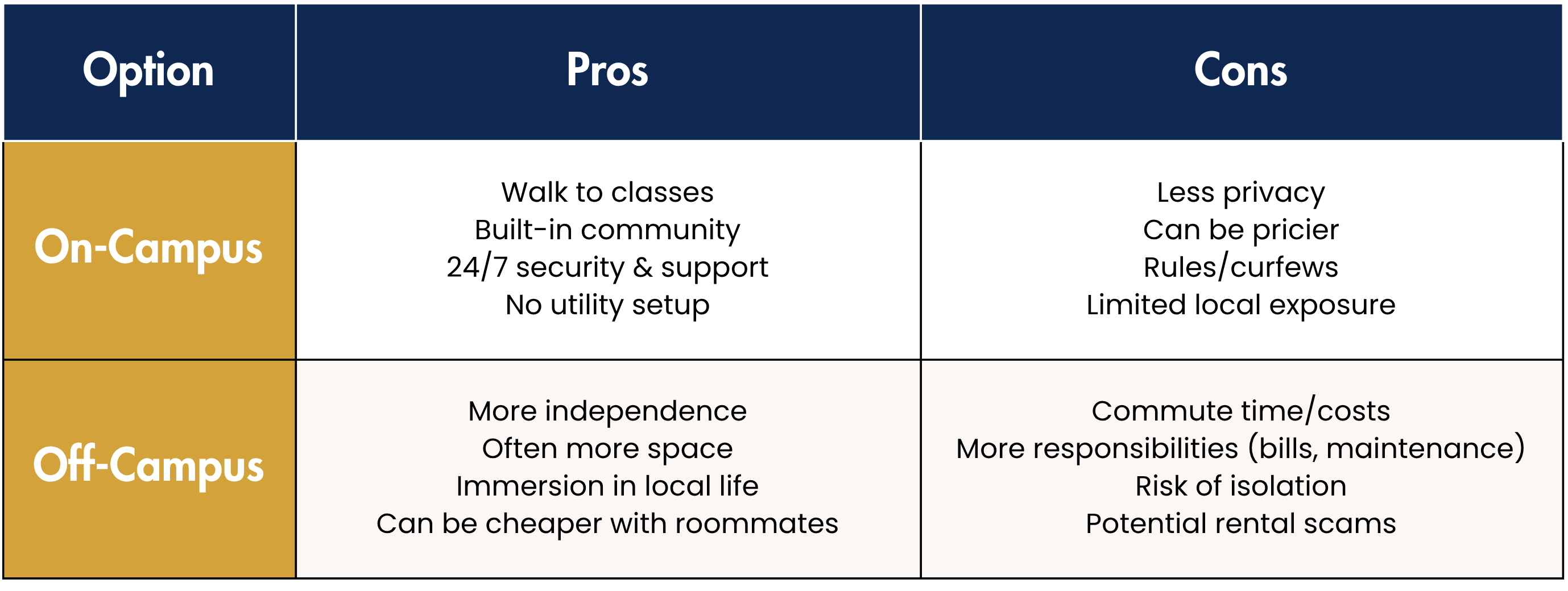
Pros of Living On Campus
1. Convenience and Proximity
Living just a few minutes away from your classes, library, and labs is a major advantage. You save time, avoid the stress of commuting, and can easily access academic and extracurricular resources. For students still getting used to their new city, this convenience makes daily life simpler and more predictable.
2. A Ready-Made Community
Dorms and residence halls are filled with students from diverse backgrounds. They’re ideal for meeting people, joining events, and forming friendships quickly, a huge benefit for international students who may otherwise feel isolated at first. Universities often organize residence activities, movie nights, and cultural dinners that make social integration easier.
3. Safety and Support Systems
Most on-campus housing options include 24-hour security, maintenance staff, and residence advisors. For parents and students alike, this provides peace of mind. If anything goes wrong, from a maintenance issue to a personal concern, help is nearby.
4. Easier Transition into University Life
From dining halls to study lounges, everything is designed to help students focus on their studies. Living on campus reduces logistical burdens and lets students concentrate on academics and social adaptation rather than worrying about paying utility bills or cooking every meal.
Cons of Living On Campus
1. Less Privacy and Personal Space
Sharing a room or communal facilities can sometimes feel restrictive. For international students used to more privacy, dorm life may require adjustment.
2. Higher Costs in Some Cases
Depending on the country and university, dorms can sometimes cost more per square meter than renting a shared apartment off campus.
3. Rules and Limitations
Many universities have regulations regarding noise, guests, or curfews. While these rules ensure order, they can sometimes limit independence.
4. Limited Local Exposure
On-campus living keeps students within the university bubble. For those hoping to experience the local culture more deeply, this can feel isolating from the real rhythm of the city.

Living Off Campus: Freedom, Flexibility, and Real-Life Experience
Off-campus housing for international students offers a very different experience, one that often mirrors real adult life. Renting an apartment or sharing a house with friends brings more independence and flexibility, but also more responsibility.
Pros of Living Off Campus
1. Independence and Freedom
When you live off campus, you make your own rules. You decide when to cook, study, host friends, or rest. For many international students, this freedom fosters personal growth and confidence which are important qualities for adjusting to life abroad.
2. Immersion in Local Culture
Off-campus living brings you closer to the city’s heartbeat. You’ll interact more with locals, shop at nearby markets, use public transportation, and explore new neighborhoods. This experience helps international students understand their host country beyond the university walls.
3. Potentially Lower Costs
Depending on the city, renting off-campus housing especially when shared with roommates can be cheaper than university dorms. Students also have more choice over amenities and can find places that match their budget and preferences.
4. A “Home-Like” Environment
Apartments often feel more personal and comfortable. You can decorate, cook your favorite meals, and create routines that make the space truly your own. For long-term students, this can make life abroad more sustainable and enjoyable.
Cons of Living Off Campus
1. Commuting Challenges
Transportation costs and travel time can quickly add up. Living far from campus can make it harder to attend early classes, join clubs, or stay late for group projects.
2. More Responsibilities
You’ll need to handle rent payments, utility bills, maintenance, and sometimes landlord negotiations, all in a new language or unfamiliar system. For first-year international students, this can be overwhelming at first.
3. Risk of Isolation
Without dorm events or nearby classmates, it’s easier to feel disconnected. Students need to actively participate in campus life to maintain a social circle.
4. Housing Scams and Safety Risks
Unfortunately, international students are often targeted by rental scams or misleading listings online. Without local knowledge, finding safe and legitimate housing off campus can be tricky.
Factors to Consider When Choosing Housing for International Students
No two students are alike. What feels like an advantage to one may be a drawback to another. When deciding where to live, consider the following key factors:
1. Budget
Look beyond rent alone, include utilities, Wi-Fi, meals, transportation, and deposits. Universities often provide cost breakdowns for both on- and off-campus housing to help you plan.
✅ Request information on BAU's programs TODAY!
2. Distance and Transportation
If you choose to live off campus, check public transportation options. A 10-minute walk or quick bus ride to campus is ideal. Anything farther may impact attendance, social life, and convenience.
3. Social Preferences
Some students thrive in social dorm environments, while others prefer quieter spaces. Think about your personality and how much community interaction you want day-to-day.
4. Duration of Stay
For short-term programs or exchange semesters, on-campus housing for international students is often simpler and more secure. For longer degrees, moving off campus might make sense once you’ve settled in.
5. Safety and Support
Always prioritize safety. Check if the area is well-lit, has reliable public transport, and isn’t too isolated. Universities often publish verified housing lists or partner with local landlords to help international students find secure options.
A Middle Ground: Living Close to Campus
For many international students, the best housing option lies somewhere in between, living on-campus or at least close to campus.
Neighborhoods around universities often offer apartments or shared houses that combine the best of both worlds:
-
You’re independent, with your own space and flexibility.
-
You can still walk or take a short ride to campus events, study groups, or the library.
-
You remain part of the student community while experiencing local life.
Living close to campus minimizes stress while maximizing opportunities for engagement — especially important during your first year abroad. It gives international students room to grow independently without losing access to the academic and social ecosystem that supports their success.
Tips for Finding the Right Housing for International Students
Whether you choose on-campus or off-campus living, here are practical tips to make the search easier and safer:
-
Start Early – University housing fills up quickly, and good apartments near campus get rented fast. Start researching as soon as you receive your admission letter.
-
Use Official Resources – Many universities have international student offices or housing platforms with verified listings.
-
Ask for Recommendations – Connect with senior students or alumni from your country who can share trusted contacts.
-
Check the Lease Carefully – Make sure you understand the rental terms, deposit requirements, and notice periods before signing.
-
Visit or Request a Video Tour – Always confirm that the property matches the photos.
-
Plan for Essentials – Don’t forget furniture, kitchen items, or utilities setup if you’re moving off campus.
These small preparations can make your housing experience smoother and more comfortable from day one.

Conclusion: Stay Close, Stay Connected
Both on-campus and off-campus living come with unique benefits and challenges. On-campus housing for international students offers structure, safety, and an instant community, perfect for those adjusting to a new country. Off-campus living, meanwhile, provides freedom, cultural immersion, and a real taste of independence.
Ultimately, the best housing for international students is the one that balances comfort, accessibility, and personal growth. For most, living close to campus strikes that balance perfectly, offering the independence of off-campus life without losing the connection, convenience, and support that make the international study experience truly enriching.
Wherever you choose to live, remember: your space is more than just an address — it’s where your new journey begins.
Frequently Asked Questions (FAQ)
-
What is the best housing option for international students?
The best option depends on your priorities. On-campus housing offers convenience and built-in community, while off-campus housing provides more independence and flexibility. Many international students prefer living close to campus for a balance of both. -
Is on-campus housing better for international students?
For many international students, especially in their first year, on-campus housing can be a great choice. It offers convenience, built-in community, easier access to campus resources, and added security, which helps with adjusting to a new country.
-
Is off-campus housing cheaper for international students?
It can be. Shared apartments may cost less than dorms, but students should factor in utilities, transportation, deposits, and furniture when comparing total expenses. -
How can international students avoid housing scams?
Use university-approved housing platforms, avoid sending money before signing a verified lease, request video tours, and confirm the landlord’s identity. If possible, ask the international student office for guidance. -
How early should international students apply for housing?
Students should start researching housing as soon as they receive their admission offer. On-campus dorms and affordable apartments near universities fill up quickly. -
Is it better to live close to campus?
Living near campus reduces commuting stress, makes it easier to attend classes and events, and helps students stay connected socially and academically.